
Tag: Politics and policy

  • Debt collectors defend doctors in skewering CFPB medical debt plan

    Doctor patient A health care provider speaks with a affected person at Hartford Hospital in Hartford, Conn., in 2022. The debt assortment trade stated in a current report that the Consumer Financial Protection Bureau’s proposal to bar the inclusion of medical debt from credit score reviews might hurt doctors.

    Bloomberg News

    Debt collectors aren’t often mentioned in the identical breath with doctors, however each industries face billions in misplaced revenue below a plan by the Consumer Financial Protection Bureau to ban medical debt from credit score reviews.

    A brand new report financed by the debt assortment trade claims that debt collectors will face increased litigation prices and can sue shoppers extra usually below a plan by the White House and the CFPB to remove medical debt from credit score reviews.

    Credit specialists and client advocates assume the report will probably be used to help litigation in opposition to the CFPB as soon as a closing rule is issued. The report claims the CFPB did not conduct enough analysis and did not have in mind the financial impression that its proposed rule would have on medical suppliers, significantly small doctors’ practices. Industry additionally claims that the 60 day interval for public touch upon the proposed rule is insufficient. Comments are due by August 12. 

    “The argument for banning medical debt from credit score reviews is that individuals do not select to get sick or be uninsured or to have huge quantities of medical money owed,” stated John Utzheimer, president of Ulzheimer Group in Atlanta, and a longtime credit score trade professional. “But do not doctors should receives a commission?” 

    Debt collectors — who acknowledge they’ve little sympathy from the general public — are portray the CFPB’s plan as dire for small and rural doctor practices that stand to lose an estimated $24 billion as soon as the plan goes into impact. Debt collectors themselves are estimated to lose 8% of their annual income below the plan. 

    Debt collectors can not try to gather a debt that’s not really owed, Ulzheimer stated, including that the $24 billion estimate in the report “actually is $24 billion that’s owed to doctors.”

    “To counsel that each one of that debt or any significant share of that debt will not be really owed is unfaithful. It’s owed,” he stated. “This different fable is that lenders do not care about medical debt, and that’s very a lot not true. They care.”

    The CFPB’s proposal would prohibit collectors from utilizing medical data in reference to underwriting selections or any credit score dedication. Credit bureaus additionally could be restricted from offering medical debt data to collectors to help credit score selections. 

    Kim Phan, a companion on the legislation agency Troutman Pepper, stated a number of industries are engaged on analysis on medical debt that could possibly be used in litigation in opposition to the CFPB. She additionally stated that the 2024 election might have a significant impression on all of the CFPB’s upcoming rulemakings.

    “As that is solely a proposed rule, a Trump-appointed CFPB director might simply select to not transfer this rulemaking ahead,” stated Phan. “Trump’s return to presidency would nearly actually change issues.”

    The CFPB’s proposed rule comes with a fair greater caveat: While medical money owed would now not seem on credit score reviews, shoppers would nonetheless owe debt. Though debt collectors might now not use the specter of reporting a medical debt as a prod to get a client to pay their payments, collectors can nonetheless contact shoppers by mail and by telephone. And many will probably be pressured to sue to recoup the money owed.  

    “We all know that typically corporations will litigate in order to determine the fame that they’ll receives a commission,” stated Andrew Negrinis, an economist at Legal Economics LLC, and a former enforcement economist on the CFPB, who wrote the report. “If you’re taking away [debt collectors’] capability to credit-report, do you assume they’re going to simply forgive the debt or do you assume they’ll litigate?”

    He stated the CFPB’s proposal must be challenged for a number of causes.

    “Any main change that’s going to trigger this a lot loss to trade and the economic system in common must be rigorously researched and reviewed earlier than being carried out,” Negrinis stated. Medical suppliers would endure $24 billion in losses the primary yr and wherever from $82 billion to $655 billion in losses over time, Nigrinis discovered.

    He additionally criticized the CFPB for failing to investigate the proposed rule’s impression on small enterprise healthcare service suppliers and whether or not private-market healthcare suppliers will reply by refusing to offer credit score to shoppers or by slicing off entry to healthcare providers. The report claims that healthcare suppliers might request extra up-front money funds and better co-pays.

    For many years, medical debt was “a non-controversial concern,” stated Ulzheimer, who beforehand labored at FICO and Equifax. 

    “This is a kind of subjects that appears to have grow to be very political and has been dragged into the quicksand of politics,” he added.

    Consumer advocates are also weighing in, claiming the CFPB has the authorized authority to implement the ban on medical debt from showing on credit score reviews regardless of current Supreme Court rulings which have eradicated deference to regulatory companies. 

    “This is about authorized interpretation, not fact-finding,” stated Chi Chi Wu, a senior lawyer on the National Consumer Law Center. She cited a number of CFPB research together with a 2014 report  exhibiting that medical money owed present much less predictive worth to lenders than different money owed on credit score reviews. A report in 2022 estimated that medical payments made up $88 billion of reported money owed however since then the three main credit score bureaus — Equifax, Experian, and TransUnion — have taken most medical payments off credit score reviews. FICO and VantageScore, the 2 main credit score scoring corporations, now not use medical collections in their scoring fashions. 

    Ulzheimer stated he’s making an attempt to debunk the CFPB’s declare that customers can anticipate a 20-point enhance in their credit score rating, a difficulty that Vice President Kamala Harris repeated on a name with reporters final month. 

    “The scoring fashions have already bypassed medical money owed,” stated Ulzheimer. “The CFPB’s plan will not be going to enhance anyone’s credit score rating.”

    Instead, the trade is highlighting the hazards not simply to lenders however to the credit score scoring system as an entire of not having medical debt reported. Lending will probably be restricted, prices will enhance and low- and moderate-income shoppers can anticipate to be rejected for credit score or get hold of it at increased charges. 

    “Basic math tells you that if somebody owes a big medical debt, that is going to impression their capability to pay a mortgage or a automotive mortgage,” stated Leah Dempsey, a shareholder on the legislation agency Brownstein Hyatt Farber Schreck, which funded the trade’s research. Dempsey is a former vice President and senior counsel at ACA International, the commerce group representing debt collectors.

    The CFPB proposal would amend Regulation V and take away a regulatory exception that federal companies gave to lenders below the Fair Credit Reporting Act permitting them to make use of medical money owed for credit score underwriting. Wu at NCLC stated the CFPB is “on stable authorized floor” in eradicating the regulatory exception that federal regulatory companies created roughly 20 years in the past. 

    “Factually, the CFPB is on stable floor as a result of Congress gave the CFPB the authority to interpret this provision about medical data,” stated Wu. She additionally cited a remark letter despatched final yr from the American Hospital Association supporting the CFPB’s proposed rule. 

    “The posturing happening is all made by debt collectors, not well being care suppliers,” she stated.

  • Powell commits to finish Fed chair time period, stays mum on future plans

    Jerome Powell Federal Reserve chair Jerome Powell, left, and David Rubenstein, co-founder of Carlyle Group Inc., throughout an Economic Club of Washington occasion in Washington, D.C. on Monday. Powell mentioned he’ll full his present time period as Fed chair however had no additional remark on his plans or aspirations after his time period expires in 2026.


    Bloomberg News

    Regardless of the end result of this fall’s presidential election, Federal Reserve Chair Jerome Powell is not going anyplace — not less than not for 2 years.

    During an onstage interview on the Economic Club of Washington, D.C. on Monday afternoon, Powell confirmed that he would full his four-year time period as the highest official throughout the Fed Board of Governors, which ends in May 2026. But he declined to speculate what may occur after that. 

    “I’ve nothing for you on that in the present day,” Powell advised his interviewer, David Rubenstein.

    Rubenstein is the co-founder and co-owner of the Carlyle Group, the Washington, D.C.-based personal fairness agency the place Powell spent a lot of his personal sector profession earlier than being nominated to the Fed board by then-President Barack Obama in 2012.

    Powell’s dedication to the place comes as Washington prepares for a attainable second time period for President Donald Trump. 

    Although Trump nominated him to function Fed chair in 2018, the previous president’s opinion of Powell shortly soured. In 2019, he expressed his displeasure with the central financial institution’s transfer to increase rates of interest. Trump publicly mused about firing Powell from the place or stripping him of his chairmanship — although it’s unclear if he would have had the authorized authority to achieve this.

    Powell’s solely direct feedback about Trump have been to denounce the assassination try towards the previous president over the weekend and to want him properly in his restoration.

    “It was actually a really unhappy day for our nation. Political violence has no place in our society, and I condemn it within the strongest phrases. I do know all of us do,” Powell mentioned. “A person died at a political rally. Two different folks have been critically injured, so only a unhappy day, and I’ll say that I’m grateful that the accidents to the previous president weren’t extra critical.”

    Fed governors are solely allowed to be appointed to one full 14-year time period, however they’re allowed to finish one other governor’s time period or stay in workplace as soon as their time period expires, as long as a substitute will not be named. Because of this, Powell might technically function Fed chair once more — a time period that may finish in 2030 — although his governorship time period ends in 2028. But he would have to be renominated by the sitting president and be confirmed by the Senate, offered he accepts the nomination to start with. 

    The difficulty of the Fed’s management and governance has re-emerged in latest weeks in mild of the so-called Project 2025 initiative, which is a transition plan for a second Trump administration drafted by conservative suppose tanks. It requires — amongst different issues — rewriting the principles that govern the Fed and different financial institution regulators. Powell didn’t handle the proposal instantly, however famous that the central financial institution will not be available in the market for brand spanking new powers or fewer duties. 

    “We’re not on the lookout for any legislation change,” he mentioned. “We suppose we’ve got the authorities that we want. We suppose that the legislation is in only a high-quality place.”

    During the interview, Powell emphasised the significance of central financial institution independence, one thing he championed all through 5 hours of testimony in entrance of the Senate Banking Committee and House Financial Services Committee final week. 

    “A very long time in the past, folks discovered {that a} central financial institution that is impartial of political consideration does a greater job getting inflation underneath management, and that’s now accepted knowledge in all superior economies all over the world. It’s additionally a precept that has very, very robust and broad help the place it actually issues, which is in Congress,” he mentioned. “You speak to senior leaders in each chambers, in each political events, and so they all perceive that you really want an impartial central financial institution that does not run financial coverage to help or oppose any specific politician or political occasion.”

  • FHFA to mandate tenant protections on multifamily properties

    The Federal Housing Finance Agency will introduce tenant protections on multifamily developments that acquire money funding from the governing administration-sponsored enterprises.

    The switch arrives instantly after session with varied discipline stakeholders and it’s the first time tenant protections are built-in in multifamily finance protection, the company talked about in an announcement Friday.

    “These calls for mirror elementary finest ways to guarantee housing corporations correctly join with tenants and that tenants absolutely grasp their rights and obligations beneath their leases,” defined FHFA Director Sandra Thompson in a push launch. 

    Less than the foundations, householders of attributes financed by Fannie Mae or Freddie Mac will likely be anticipated to ship tenants 30 days penned observe prematurely of any improve in lease or lease expiration. A five-working day grace interval for rent funds may even be mandated. 

    “The tenant protections declared at the moment are the end result of a collaborative effort and onerous work involving FHFA, the enterprises, tenants and landlords to tackle points confronted in rental housing now,” Thompson defined. 

    Fannie Mae and Freddie Mac will implement tenant protections, with facets of the coverage to be revealed in August. The regulation will get profitable for brand new multifamily loans signed on or following Feb. 28, 2025, and noncompliance may information to borrower penalties beneath circumstances of the contract. 

    The plan was created simply after FHFA issued a public request for information in 2023 aimed toward getting solutions to safeguard renters and increasing equity within the trade. The firm launched a full report dependent on its conclusions earlier this yr.

    Troubles lifted amongst some respondents relating to tenant-defense specs bundled enforcement points, particularly when mortgage suppliers or servicers have been being not aware of associations amongst renter and landlords. 

    Tenant advocates claimed the corporate ought to actually ponder enacting insurance policies to avert an excessive amount of rent will improve at GSE-financed properties. Suggestions supplied an annual proportion cap on raises or stabilization of yearly rents dependent on financial and present market facets. 

    Freddie Mac previously claimed multifamily expense circumstances within the to begin with quarter this yr on the backs of lower curiosity fees. Assets promoting costs declined nationwide on equally a quarterly and yearly basis. Meanwhile, web operating revenue for merchants arrived in flat from the previous quarter however improved per yr. 

    The newest regulation is available in what’s turning into an eventful yr for coverage development on the FHFA. In May maybe, the corporate launched a brand new RFI to get feedback on the Federal Home Personal mortgage monetary establishment method and the way in which it could fulfill its housing finance mission. Final thirty day interval, FHFA additionally appointed 19 housing leaders to a brand new committee centered on dwelling affordability. 

    The authorities-sponsored enterprises are at current in the midst of motion of introducing new FHFA-authorized pilot purposes exploring title-coverage waivers on some refinances as completely as a controversial initiative to buy closed-conclude subsequent liens.

  • Appeals court delivers big win to CFPB in Townstone redlining case

    BankThink of new CFPB proposed regulations A federal appeals court dominated in favor of the Consumer Financial Protection Bureau that introduced an enforcement motion in opposition to a Chicago mortgage lender, Townstone Financial, after its president made disparaging remarks about Blacks and Hispanics in a radio infomercial. Bloomberg News

    Ting Shen/Bloomberg

    A federal appeals court dominated that the Consumer Financial Protection Bureau has broad authority to discourage discrimination to fight redlining, delivering a significant victory to the bureau in a contentious case, CFPB v. Townstone Financial, in opposition to a Chicago mortgage lender.

    A 3-judge panel of the U.S. Court of Appeals for the seventh Circuit dominated that the Equal Credit Opportunity Act applies not simply to credit score candidates but in addition to potential candidates.

    The CFPB filed a redlining lawsuit in opposition to Townstone Financial in 2020 alleging that the corporate’s CEO Barry Sturner made disparaging remarks about Blacks on a talk-radio infomercial that discouraged minorities from making use of for residence loans. At difficulty in the case was whether or not Sturner had discouraged black potential candidates from making use of for mortgage loans with Townstone, in violation of ECOA and Regulation B — which prohibits collectors from discriminating on the premise of intercourse, race, shade, faith, nationwide origin, age or marital standing.

    Congress had indicated that the legislation should be construed broadly to serve the aim of ending discrimination in credit score functions, the judges stated. 

    “An evaluation of the textual content of the ECOA as a complete makes clear that the textual content prohibits not solely outright discrimination in opposition to candidates for credit score, but in addition the discouragement of potential candidates for credit score,” the judges wrote in a 15-page opinion. “When the textual content of the ECOA is learn as a complete, it’s clear that Congress licensed the imposition of legal responsibility for the discouragement of potential candidates. Regulation B’s prohibition on discouraging potential candidates is due to this fact in line with the ECOA’s textual content and objective.”

    The CFPB had cited as proof of discrimination feedback that Sturner made on the radio industrial in which he described a Jewel-Osco grocery retailer as “Jungle Jewel,” and claimed the South Side of Chicago between Friday and Monday was “hoodlum weekend.”

    The CFPB had recognized 5 cases in which Sturner and different hosts made statements that may discourage black potential candidates from making use of for mortgage loans. In addition, the bureau alleged that from 2014 to 2017, Townstone obtained fewer mortgage functions from black candidates, fewer mortgage functions for properties in neighborhoods with a high-black inhabitants, and fewer mortgage functions for properties in neighborhoods with a majority of black residents.

    Last 12 months, the United States District Court for the Northern District of Illinois dismissed the case in the favor of Townstone by specializing in ECOA’s definition of a credit score applicant. The decrease court additionally rejected the CFPB’s argument that its enforcement and rulemaking authority allowed it to prohibit discouragement of potential candidates. The CFPB appealed.

    “The district court held that the ECOA doesn’t authorize the imposition of legal responsibility for the discouragement of potential candidates. We take a distinct view,” the judges wrote. 

    “The time period “applicant” can’t be learn in a crabbed vogue that frustrates the plain statutorily articulated objective of the statute,” the judges wrote. “Indeed, the ECOA’s scope of prohibition prohibits discrimination ‘with respect to any side of a credit score transaction.’ ”  

    The case was reversed and remanded again to the district court. 

    “Discouraging candidates is the primary software in the e-book of redlining. A discriminatory lender could really feel like utilizing a ‘Whites Only’ signal is the easiest way to accomplish their objective,” stated Adam Rust, director of monetary companies on the Consumer Federation of America. “I believe it was frequent sense to learn the legislation and are available to this conclusion.”

    The CFPB didn’t instantly reply to a request for remark. 

    The Pacific Legal Foundation, which represented Townstone, had argued that Sturner was protected below the First Amendment.

    “We’re disenchanted in the choice, which provided solely a cursory evaluation of the related statutes and ignored fully Townstone’s First Amendment arguments,” the general public curiosity legislation agency stated in an assertion. “We are contemplating our choices for additional overview.”

    Townstone could enchantment the case to the complete seventh Circuit or to the Supreme Court, specialists stated.

  • Powell says Fed can’t muscle FDIC, OCC on new capital proposal

    Jerome Powell Federal Reserve Chair Jerome Powell informed the House Financial Services Committee that the central financial institution is on equal footing with different financial institution regulatory businesses in Washington.

    Al Drago/Bloomberg

    The Federal Reserve is “able to go” ahead with a new capital proposal for banks, but it surely can not pressure different regulators to maneuver on the problem, Fed Chair Jerome Powell informed Congress on Wednesday.

    In his second look on Capitol Hill this week, Powell informed the House Financial Services Committee that the Fed doesn’t have supremacy over the Federal Deposit Insurance Corp. or the Office of the Comptroller of the Currency on regulatory issues and it’ll not try to strong-arm the opposite two businesses on revisions to their joint Basel III endgame proposal. 

    “I might say it is strictly collaborative,” he stated. “And I might say that our discussions with the FDIC, which [Fed] Vice Chair [Michael] Barr has truly been conducting, and the OCC, they have been very productive to this point. So … we have continued to work our means via this, and I imagine we’ll get, pretty quickly, to a decision of the remaining course of situation.”

    Powell’s newest remarks come in the future after he declared the Fed’s curiosity in re-proposing the so-called Basel III endgame package deal to permit the general public a chance to remark on the “broad and materials adjustments” which were made to it in latest months. 

    During Wednesday’s three-hour listening to, Powell declined to say what’s holding up negotiations between the Fed, FDIC and OCC over how one can proceed. 

    “I do not need to say that we’re at odds,” he stated. “I simply need to say we’re working via this situation collectively.”

    He additionally refused to lift the curtain on adjustments the Fed has already made to the proposal, noting that “nothing is agreed till all the pieces is agreed.” 

    Powell did notice that not all adjustments made to the unique proposal — which was put forth final summer time and attracted all kinds of public feedback, the overwhelming majority of which have been in opposition — can be included within the re-proposal. 

    “We’re targeted on one huge space, however there are establishments which have made feedback all throughout the spectrum, and we’re studying all of these fastidiously. We’re not going to republish all of these,” he stated. “Some of these, we will simply make adjustments and transfer ahead on.”

    Powell additionally amended a few of his statements from yesterday’s hearings. Instead of noting the “strongly held view of the board” on the matter of re-proposal, he referred to “the robust view of quite a lot of board members.” He additionally clarified that whereas the capital rule may very well be finalized as quickly as the primary quarter of subsequent yr, that was one in all a “vary” of potential timelines. 

    Despite his perception {that a} re-proposal is acceptable and in step with previous actions by regulators, Powell didn’t rule out the potential of shifting to finalize the rule with out searching for extra public enter. But, if that choice is on the desk, committee members let Powell know that utilizing it will draw a swift backlash.

    “Broad and materials adjustments to the Basel III endgame necessitate a full re-proposal. Full cease,” stated Rep. Patrick McHenry, R-N.C., who chairs the Financial Services Committee. “Failure to take action will lead to an instantaneous Congressional Review Act vote out of this House of Representatives as rapidly as we will probably course of it.”

    When pressed for his views on the present stage of capital inside the banking system, Powell informed the committee it was “about proper,” however famous that figuring out the optimum quantity of capital isn’t a precise science. He stated his most important objective in finalizing the capital reforms is to place the U.S. on even footing with different giant international locations and banking jurisdictions world wide. 

    Powell added the adverse public response to the preliminary Basel III endgame proposal — accounting for properly over 90% of the general suggestions, by some estimations — is one thing that ought to be addressed. 

    “Broad assist, empirically, would imply an excellent strong vote on the Fed board. I’ve tried to not be particular about what which means,” he stated. “But it additionally means broad assist among the many broader neighborhood of commenters on all sides.”

    He additionally made clear that the Fed doesn’t intend to pursue some other regulatory reform gadgets — corresponding to new long-term debt necessities and liquidity requirements — till adjustments to the capital proposal are agreed upon and put forth to the general public.

    Powell stated the Fed is committing sources to bettering the infrastructure underlying its last-resort lending facility, the low cost window, including that the present person interface is “drained.”

    Another matter of repeated curiosity from legislators — each within the House Financial Services Committee on Wednesday and within the Senate Banking Committee on Tuesday — was govt compensation at banks. Specifically, lawmakers needed to know why the Fed didn’t be part of the FDIC, OCC and Federal Housing Finance Agency in proposing new restrictions on incentive-based compensation for financial institution leaders in May. The National Credit Union Administration and the Securities and Exchange Commission have pledged to take comparable steps within the close to future.

    Section 956 of the Dodd-Frank Act of 2010 required the monetary regulators to develop insurance policies on compensation to make sure executives weren’t incentivized to take extreme dangers. The proven fact that the Fed has gone so lengthy with out assembly this mandate has annoyed some members of Congress for years, however the situation has taken on renewed relevance within the wake of the failure of Silicon Valley Bank and different giant regional banks final yr. 

    Powell, who previously has stated he want to higher perceive the problem the regulators are searching for to unravel, testified that the Fed is continuous to discover the subject. At a number of factors this week, he pointed to steering the Fed issued concerning govt compensation in 2010 and famous that the company’s examiners strictly supervise banks to make sure they adhere to those requirements. He stated the Fed’s job isn’t completed, however implied on Wednesday that it might have met its authorized obligations.

    “Section [956] requires a rule or steering, by the best way,” Powell stated after an alternate with Rep. Nydia Velazquez, D-N.Y. “It doesn’t require a rule.”

  • FHA releases revised draft of servicing defect taxonomy

    The Federal Housing Administration on Wednesday launched the long-awaited redraft of a servicing defect taxonomy, which goals to supply a classification system for the varieties of errors or violations servicers might make when managing borrower funds on FHA loans.

    The transfer follows the finalization of a tweak to the FHA’s defect taxonomy for mortgage manufacturing, which provides accountability for third-party originators. The servicing taxonomy consists of related accountability for TPOs.

    “FHA and lenders have had a optimistic expertise utilizing our origination defect taxonomy, and we count on this new software will present related advantages for our mortgage servicing companions,” stated Sarah Edelman, assistant secretary of single-family housing, in a press launch.

    The earlier draft of the servicing taxonomy divided insured mortgage defects into six classes and 4 danger tiers. Trade teams had been involved it lacked element and half of the rationale it has been delayed was that they requested for and obtained an prolonged remark interval on it.

    The Housing Policy Council and Mortgage Bankers Association stated they had been reviewing the adjustments at deadline,

    “MBA helps the purpose of bettering readability and certainty and appreciates the use of the Drafting Table, because the iterative course of improves coverage. We stay up for assembly with our members to formulate our feedback on the proposal,” Pete Mills, MBA senior vice chairman of residential coverage, stated in an e mail.

    The descriptions for treatments and indemnification have probably the most important adjustments and extra particulars have been added all through. Distinctions are made between servicing and underwriting defects.

    The revised taxonomy largely retained its earlier six-category classification system, together with servicing operations, account administration, delinquent and default servicing, loss mitigation processing, residence retention and disposition.

    It additionally largely preserved the same four-tier severity categorization, with the highest one reserved for fraud and “materially misrepresented data” that servicers “knew or ought to have recognized” about.

    The second tier, which was beforehand designed for errors involving procedural considerations, particularly cites “underwriting findings that will have altered the loans approval and/or eligibility” and servicing discoveries requiring “corrective” actions like paperwork with lacking or false data.

    Both high tiers require responses, that are in any other case non-compulsory. FHA permits rebuttals for any findings.

    Other sorts of underwriting findings not impacting eligibility or approval for insurance coverage fall into the third tier as are these in servicing that “don’t influence FHA.”

    Also within the third tier are sure violations of the Department of Housing and Urban Development’s coverage “the place FHA can decide compliance with federal and/or state legal guidelines and rules that govern servicing usually.”

    The fourth tier “is primarily used for findings of fraudulent or materially misrepresented details about which the mortgagee didn’t know or couldn’t have recognized.” Also on this class are “minor information integrity points” in underwriting that do not have an effect on eligibility or approval.

    All fraud findings shall be investigated “regardless of severity.”

    Life-of-loan indemnification is the one treatment for the primary tier, however these within the second could have some alternate options.

    “In some circumstances, a number of treatments could also be crucial,” in response to the FHA.

    The FHA additionally laid out some “common components” for what’s going to decide the time period of an indemnification the place flexibility is allowed.

    A one-year time period is feasible for servicing defects solely in circumstances the place the mortgage is performing on the time of evaluation and there’s “documentation of a very good religion effort to mitigate the discovering however is unsuccessful as a consequence of circumstances past the servicer’s management.”

    Five-year indemnifications could also be a response to servicing defects which might be related however contain a delinquent mortgage, or “an improperly accomplished mortgage assumption for a borrower who was not credit score certified.”

    Also in that class are underwriting defects associated to “violations associated to the borrower’s credit score or revenue, which influence the borrower’s creditworthiness or capability to repay the mortgage.”

    Five-year indemnifications might also handle points the place there was “noncompliance with FHA necessities for verifying and documenting adequate funds from a suitable supply to facilitate closing or for figuring out the property used to qualify.

    Circumstances apart from fraud or materials illustration that require life-of-loan indemnification embody servicing defects associated to an FHA dedication on a mortgage in conveyance or a declare standing that includes the improper completion of a house disposition.

    Also requiring lifelong indemnification are underwriting defects associated to violations concerning the property’s valuation or eligibility, sure borrower necessities and coverage violations associated particularly to Home Equity Conversion Mortgages.

  • CFPB proposes new mortgage servicing rule to aid struggling borrowers

    The Consumer Financial Protection Bureau is proposing a new mortgage servicing rule to assist struggling borrowers keep away from foreclosures by adopting protections that it made accessible through the COVID-19 pandemic.

    On Wednesday, the CFPB put ahead modifications that might require mortgage servicers to present help instantly after a borrower asks for assist. Servicers would solely be allowed to transfer forward with a foreclosures after exhausting all efforts — except the borrower has stopped speaking with the servicer, the CFPB stated. The proposal additionally would restrict the charges a servicer can cost a borrower whereas reviewing potential choices similar to forbearance, deferrals and mortgage modifications. 

    The proposal is a significant shift from the extremely prescriptive, document-intensive strategy that the CFPB took after the 2008 mortgage disaster. It depends closely on modifications made through the pandemic when the CFPB adjusted its guidelines briefly to allow servicers to present forbearances, deferrals and mortgage modifications. The proposal is meant to create sturdy incentives for servicers to act rapidly and pretty when borrowers request assist. 

    The 196-page proposed rule would amend rules issued in 2013 by streamlining and revising current necessities when borrowers search help in instances of misery. The CFPB stated the proposed rule, if finalized, would improve the chance that traders and borrowers could be spared the prices of avoidable foreclosures.

    “When struggling householders can get the assistance they want with out pointless obstacles, it’s higher for borrowers, servicers, and the financial system as an entire,” CFPB Director Rohit Chopra stated in a press launch. “The CFPB’s proposal would scale back avoidable foreclosures and make the mortgage market extra resilient throughout future crises.”

    Currently, mortgage delinquencies and foreclosures charges stay close to all-time lows. But the CFPB stated foreclosures may improve sooner or later as a result of customers are grappling with larger ranges of debt. Foreclosure begins have risen in latest months, growing the dangers to susceptible customers. 

    The proposal builds on suggestions the CFPB acquired from mortgage servicers, client advocates and commerce associations in response to a 2022 request for data. 

    One of the most important modifications is the hassle to eradicate so-called twin monitoring, during which a servicer proceeds with a foreclosures whereas additionally contemplating a borrower’s software for a mortgage modification or one other loss mitigation possibility. 

    In one other main change, servicers can be required to present tailor-made notices to borrowers with details about who owns their mortgage and the way to get help after a missed cost, in accordance to the proposal. The notices would have to be offered in each English and Spanish and interpretation companies have to be made accessible to these talking different languages, the CFPB stated.

    Small servicers that deal with fewer than 5,000 loans are excluded from the proposal and usually have been exempt from the CFPB’s loss mitigation guidelines. More than 90% of dwelling loans are dealt with by giant mortgage servicers. The proposal is open for public remark for 60 days. 

    The bureau first instructed in April that it will suggest streamlining mortgage servicing guidelines if doing so allowed mortgage servicers to reply extra readily to future financial shocks whereas additionally guaranteeing borrowers are assisted promptly and pretty.

    The CFPB has the authority to suggest the modifications beneath the Real Estate Settlement Procedures Act and the Dodd-Frank Wall Street Reform and Consumer Protection Act.

  • Middle-income housing programs increase nationwide

    A document quantity of middle-income renter households really feel cost-burdened and more and more state and native governments are trying to treatment that with focused housing programs, in response to a examine by Harvard University’s Joint Center for Housing Studies. 

    Households of all revenue ranges have seen extra price burdens over latest years. The whole variety of cost-burdened rental households hit a peak of twenty-two.4 million in 2022, an increase of two million households because the begin of the pandemic, in response to the examine. 

    However, middle-income renters have skilled the quickest will increase in housing bills over the previous 20 years, which accelerated in the course of the pandemic. Nationally, one-third of middle-income renters are cost-burdened, the examine mentioned. 

    These programs have change into more and more prevalent lately and might be present in a spread of market circumstances and politically various places, the examine mentioned. Their major objective is to handle housing challenges of the “workforce,” although eligibility is decided by space median revenue, slightly than employment necessities, researchers discovered. 

    Middle-income programs haven’t but been efficiently carried out on the federal stage. But a rising variety of states that had been traditionally inexpensive, resembling Colorado and Michigan, now have insurance policies that present subsidies for middle-income housing, as just one% of American counties are thought-about inexpensive. 

    “These programs maintain some promise for increasing the availability of inexpensive housing, particularly in locations with extreme affordability challenges or in difficult-to-develop areas,” mentioned the Harvard researchers of their examine. 

    However, additionally they face backlash from advocates who worry these subsidies will redirect much-needed assets away from lower-income households, the examine mentioned. 

    Middle-income housing programs differ by way of their funding mechanisms, affordability durations and eligibility necessities. Most of them are additionally comparatively new, having come into existence after the pandemic. 

    Most of the accessible programs emphasize new development. The Colorado Middle-Income Housing Authority plans to make 3,500 items inexpensive to middle-income renter households, together with a minimum of 2,800 items that have to be newly constructed.

    The “affordability interval” for property house owners taking part in these programs run the gamut: Rhode Island’s Middle Income Loan Program will implement that qualifying housing is saved inexpensive for a minimum of 30 years, and Massachusetts between 15 and 40 years. On the low finish, Florida’s qualifying properties want solely be saved inexpensive for 3 years. 

    Some programs are outliers of their methods, like California’s Statewide Communities Development Authority Workforce Housing Program. It acquires current market-rate rental housing and income- and rent-restricts them for eligible households, permitting longer-term, if not everlasting, affordability. 

    While programs of this sort haven’t but been profitable on the federal stage, a middle-income housing tax credit score has change into a perennial coverage proposal. 

    According to the Harvard examine, it might operate just like the Low-Income Housing Tax Credit program, allocating funding to states on a per capita foundation to then award to builders for the development, redevelopment, or acquisition of rent-restricted flats for middle-income renters. 

    Legislation for the tax credit score was first launched in 2016, with the latest growth, the Workforce Housing Tax Credit Act, despatched to committee on the finish of 2023.

  • Fed’s Powell says new proposal for Basel III endgame is “important”

    Jerome Powell Jerome Powell, chairman of the Federal Reserve, stated the Fed board of governors favors issuing a new capital reform proposal over finalizing a modified model of the bundle put forth final 12 months.
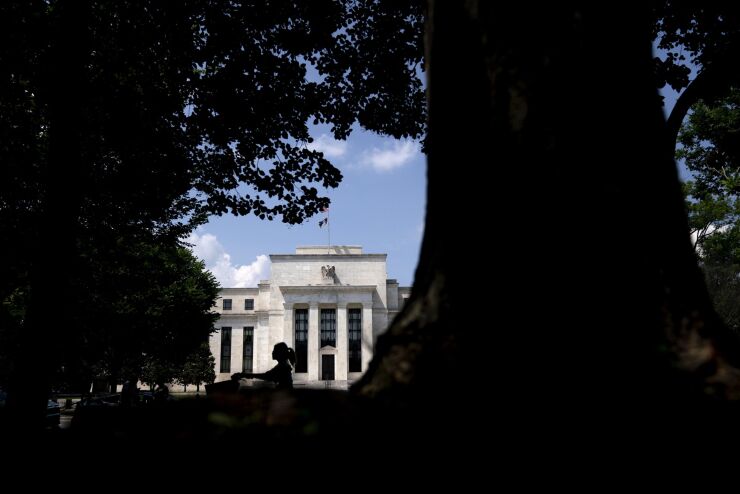
    Tierney L. Cross/Bloomberg

    Federal Reserve Chair Jerome Powell favors issuing a new capital proposal in response to the broad issues raised in regards to the reform bundle put forth by financial institution regulators final 12 months. But it is unclear if different Washington regulators really feel the identical.

    During testimony in entrance of the Senate Banking Committee on Tuesday, Powell stated the Fed has made important progress in absorbing the varied feedback it acquired in regards to the so-called Basel III endgame proposal and is “shut” to agreeing with the Federal Deposit Insurance Corp. and the Office of the Comptroller of the Currency on a path ahead. 

    Powell declined to debate particular modifications to the proposal, however stated an extra spherical of public commentary is “important,” given the diploma of modification.

    “My view, the strongly held view of the board, is that we do must put a revised proposal out for remark for some interval, and the explanation is when there are broad and materials modifications, that has been our observe,” he stated. “We do not see a purpose to deviate from that observe, it appears to be in keeping with previous observe and with the Administrative Procedure Act, in order that’s very a lot what we predict.”

    Powell stated Fed Vice Chair for Supervision Michael Barr, the central financial institution’s high regulatory official, is engaged together with his counterparts on the FDIC and the OCC, however the three businesses have but to make any remaining choices.

    The OCC declined to touch upon Powell’s remarks and the FDIC didn’t instantly reply to a request for remark.

    FDIC board member Jonathan McKernan — a Republican and frequent dissenter to the company’s regulatory insurance policies — expressed assist for opening the amended proposal to a different spherical of public commentary.

    “Count me in settlement with the strongly held view of others that we have to repropose the Endgame proposal with broad and materials modifications,” McKernan posted on X, the social community previously often known as Twitter, on Tuesday afternoon. 

    Powell stated he want to see the amended capital proposal issued for public remark alongside the findings of the Fed’s quantitative affect evaluation of how the most important 30 or so banks within the nation could be impacted by the new capital framework. He famous that the new proposal would seemingly include a remark window of 60 days or so, considerably shorter than the 120-day interval for the preliminary proposal.

    Powell stated there is “fairly a bit of labor” to be executed earlier than a revised proposal will be issued. He added that it additionally takes a number of months for feedback to be absorbed and included into the ultimate rule. He famous that the ultimate rule seemingly wouldn’t come collectively earlier than the top of 2024. 

    “It’s onerous to be exact,” Powell stated. “You write these things up, then you definately put it out for feedback, then you definately learn the feedback, then you definately write the ultimate rule. The starting a part of subsequent 12 months is a superb guesstimate.”

    Powell declined to say whether or not he thought the modifications being thought-about would represent a “logical outgrowth” from the unique proposal. If they had been, regulators may legally transfer to finalize the rule instantly, whereas in the event that they weren’t, a new discover and remark course of could be required below the Administrative Procedure Act.

    Proponents of the capital reform have argued that the broad set of questions requested by regulators once they issued the proposal final summer time offers them ample room to switch the rule and transfer straight to finalization. 

    Supporters of the proposal took situation with Powell’s feedback. Jeremy Kress, a legislation professor on the University of Michigan and a former Fed lawyer, stated the Fed chair is successfully “exercising a unilateral veto” on a direct finalization. 

    In a publish on X, Kress additionally stated it was a breach of etiquette for one financial institution regulator to overtly focus on divergent coverage views of different businesses.

    “Setting apart Powell’s private views on Endgame, it is uncommon for a Fed official to reveal an interagency rift to Congress with out the opposite businesses there to make their case,” Kress wrote.

    Opponents of the Basel III endgame, in the meantime, will likely be scrutinizing the subsequent proposal fastidiously. Trade teams representing the big banks have already signaled their readiness to sue regulators over the capital rule if it is not modified considerably, even going as far as to retain one of many high administrative attorneys within the nation to deal with the case. 

    Following the listening to, Greg Baer, president and CEO of the Bank Policy Institute, stated Powell’s feedback had been encouraging, however he famous that the banking commerce teams usually are not prepared to face down simply but. 

    “We are heartened that the proposal has been rethought and that the general public can have an opportunity to touch upon the rethinking; nonetheless, the main points listed below are essential, so clearly we might want to see the scope and particulars,” Baer stated in a written assertion. “And after all there stays the query of how the Basel proposal suits with the Federal Reserve’s stress check, the GSIB surcharge and different regulatory necessities.”

  • Fed emphasizes independence, transparency in monetary coverage report

    White House Rebuff On Gas Tax Casts Doubt On Infrastructure Deal The Federal Reserve utilized its most newest monetary plan report to stipulate the measures it has taken to be rather more clear in the course of the earlier 30 a few years.

    Bloomberg News

    The Federal Reserve utilised its semiannual monetary coverage report to tout its independence and its doc on transparency.

    The report, launched Friday early morning, identified that the central financial institution’s capability to carry out monetary plan unilaterally enjoys “broad assist,” even when such actions seem with difficult tradeoffs.

    “It is extensively comprehended that the monetary plan actions that produce utmost work and charge stability in the extra time run could effectively entail restraining actions that entail quick-run financial expenditures, though actions that elevate output and work to unsustainable levels don’t have any prolonged-operate precise added advantages and will maybe direct to elevated inflation premiums,” the report well-known. “These points highlight the advantage of monetary coverage remaining carried out by an impartial firm whose conclusions are primarily based totally on the congressionally assigned twin mandate.”

    The Fed additionally detailed, at size, its makes an attempt to craft its insurance policies in a clear method and make clear them to the general public. It notes the initiatives which have expanded the Fed’s accountability by the sooner 30 years, which embrace issuing a joint coverage assertion and holding a push convention instantly after every Federal Open Market place Committee assembly, as successfully because the company’s varied stories and speeches from its officers. 

    “The change to larger transparency has mirrored not solely the truth that transparency helps the Federal Reserve’s accountability, but in addition widespread acceptance that transparency can contribute to the efficiency of monetary coverage,” the report notes.

    The report additionally summarizes the Fed’s plan steps from the sooner couple months, which incorporates its conclusions to maintain its benchmark curiosity value steady and sluggish the tempo of its concord sheet discount. Echoing statements from the FOMC and private Fed officers, the report identified that inflation has slowed noticeably and financial issues ought to allow for coverage premiums to be eased in the in shut proximity to long term — as earlier than lengthy because the committee feels the slowdown is sustainable.

    Fed Chair Jerome Powell is ready to point out up in entrance of the Senate Banking Committee on Tuesday and the Residence Economic Products and providers Committee on Wednesday to discover the outcomes of the report and reply considerations from committee members. This is widespread observe for the Fed’s biannual monetary assessments. 

    The Fed has launched monetary coverage tales at minimal 2 instances a 12 months as a result of truth 1997, usually issuing a single all through the very first quarter — in February or March — and a single all-around the middle of the 12 months — in June or July. The overviews normally cope with a broad collection of developments, each on the Fed by itself and in the broader general financial system, to disclose the actions made to day and provides a notion of wherever coverage could be heading. 

    Transparency and independence usually are not normally highlighted in its monetary coverage opinions. The previous time they’d been was in February 2019, because the Fed geared as much as launch its Fed Listens occasion sequence in conjunction with its initially-at any time monetary plan strategic consider. 

    This type of testimonials are meant to decide on place every particular person 5 many years, this implies the central financial institution will shortly be thanks for an individual. All by a the most recent press conference, Powell said the strategy will begin off afterwards this 12 months or early following, however declined to reveal any specifics concerning the scope of the consider.

    The report additionally talked about that the cash approach appears to be on appear footing, however talked about many areas of potential weak spot for banking establishments. 

    In specific, the report flagged “sizable” paper losses on fixed-rate property and vital reliance by quite a few monetary establishments on uninsured deposits as prime worries. It additionally well-known {that a} mixture of higher funding bills and better predicted losses on industrial genuine property and buyer monetary loans would most definitely put downward strain on lender income. 

    The report additionally noticed that despite the fact that mortgage enlargement has developed throughout the earlier 5 months, it stays tepid, noting that firms have favored bond issuance over lender borrowing for his or her private debt requires. It included that regional monetary establishment inventory prices have continued to lower in present months when substantial monetary establishment valuations have risen, reflecting “lingering issues” about regional banking establishments in the wake of previous 12 months’s function of failures.

    Even now, the Fed discovered that almost all banks have money concentrations “effectively increased than” their statutory minimums and liquidity is “sufficient,” as banks have shied absent from quick-phrase wholesale funding.