Tag: slows

  • Construction cost growth slows | Australian Broker News

    Construction cost growth slows | Australian Broker News

    News

    Construction cost growth slows

    Residential prices rise at slowest tempo in additional than 20 years

    Construction cost growth slows

    After years of accelerated growth, residential building prices have stabilised, rising on the slowest annual price in 22 years, in keeping with CoreLogic’s Cordell Construction Cost Index (CCCI).

    The Q2 2024 nationwide CCCI recorded a 0.5% rise, slowing farther from the 0.8% improve in Q1.

    Annual building cost improve

    During FY24, annual prices elevated by 2.6%, marking the smallest annual rise since March 2002 (2.3%) and considerably beneath the pre-COVID decade common of 4%.

    “The growth in prices has lastly returned inside regular margins; nevertheless, the worth of building will not be falling and constructing or renovating stays nearly 30% dearer now than pre-COVID,” CoreLogic Research Director Tim Lawless (pictured above) mentioned.

    “It’s seemingly the easing within the growth of building prices over the previous six months, alongside greater established housing costs, will steadily assist to restore builder revenue margins and circulation by means of to offering extra confidence round pricing for brand new builds and renovations.”

    State-wise, the quarterly change in CCCI stays aligned, starting from 0.3% in Queensland to 0.6% in NSW and Victoria.

    Material prices improve

    CoreLogic building cost estimation supervisor John Bennett attributed the general de-escalation in building cost will increase to diminished pricing volatility amongst supplies.

    “Although some classes are registering a fall in value, there are a number of elements that make up the cost to construct,” Bennett mentioned. “Sustained points throughout the availability chain, which plagued the trade all through COVID have largely resolved however prices for labour stay elevated and contribute considerably to any residential challenge.”

    Inflation comparability

    Nationally, CPI was up 1% within the March quarter in contrast with a 0.8% rise in residential building prices.

    With building prices rising by 0.5% within the June quarter, Lawless mentioned, “Residential constructing prices are a key enter for the housing part of the patron value index. Although rents stay a ache level for housing inflation, the slowdown in residential building prices is a optimistic end result for inflationary pressures.”

    Building approvals

    Lawless commented on the rise in constructing approval figures in May, which rose by 5.5%.

    “Even with May’s uptick in constructing approvals, we’re nonetheless navigating the underside of the approvals cycle,” he mentioned.

    “Any restoration stays tentative and unconvincing given 1000’s of authorized tasks aren’t coming to fruition for a wide range of causes and constructing exercise stays sluggish as a result of a considerable backlog of tasks which can be nonetheless progressing by means of the pipeline.”

    To evaluate the most recent figures with the earlier outcomes, click on right here.

    Get the most popular and freshest mortgage information delivered proper into your inbox. Subscribe now to our FREE every day e-newsletter.

    Related Stories

    LATEST NEWS

    Perth market surges

    Keep up with the most recent information and occasions

    Join our mailing record, it’s free!

  • Unit rental growth slows | Australian Broker News

    Unit rental growth slows | Australian Broker News

    News

    Unit rental growth slows

    Sydney, Melbourne, and Brisbane hit hardest

    Unit rental growth slows

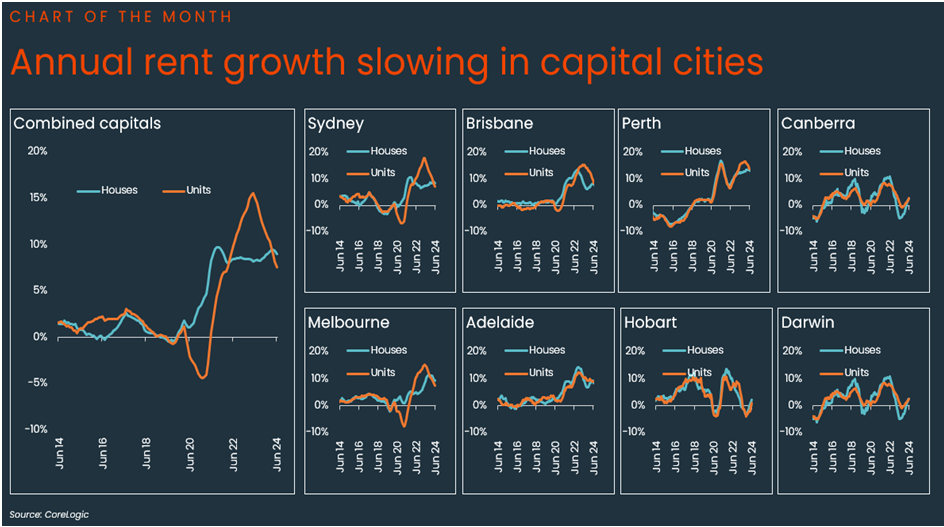
    CoreLogic’s Housing Chart Pack for July highlighted a big slowdown in annual rental growth throughout Australia’s main cities.

    The growth price fell to eight.6% from a excessive of 10.6% in April.

    “Although rents haven’t really declined year-on-year, there’s a clear slowing within the tempo of annual growth throughout the big inner-city unit markets of Sydney, Melbourne, and Brisbane,” mentioned Eliza Owen (pictured above), CoreLogic head of analysis for Australia.

    Sydney noticed the annual price of growth for unit rents fall 10 share factors to 7.1%.

    In Melbourne, unit rents dropped 7.4 share factors to 7.5%, whereas Brisbane’s unit hire growth slowed from 15.3% final yr to eight.5% this yr.

    Historic averages and demand

    Owen identified that regardless of the slowdown, Sydney and Melbourne’s growth charges are nonetheless nicely above historic averages of two.7% and a pair of.6% respectively.

    “Rental demand is just not sturdy sufficient to maintain ongoing, double-digit growth throughout these cities,” she mentioned.

    In distinction, annual growth in home rents has elevated barely, and regional rents have additionally re-accelerated, suggesting a shift in rental demand from metropolis models to homes and regional areas.

    Key Insights from CoreLogic’s July Housing Chart Pack


    Property values: The mixed worth of residential actual property rose to $10.8 trillion on the finish of June.
    Quarterly growth: The tempo of growth eased to 1.8% within the June quarter, down from 1.9% in March.
    Home gross sales: There have been 37,148 gross sales in June, with an annual depend of 508,610, 8.6% above final yr.
    Selling time: Properties are promoting quicker in Perth, Brisbane, and Adelaide in comparison with a yr in the past.
    Listings and provide: New listings are 7.8% increased than final yr, however complete listings are 17.3% beneath the historic five-year common, indicating persistent undersupply.
    Auction clearance charges: The four-week common public sale clearance price trended barely decrease at 64.2%.
    Rental growth: Annual growth in hire values slowed to eight.2% nationally, with June exhibiting the bottom month-to-month growth since September final yr.
    Dwelling approvals: Unit approvals noticed a 14.2% carry in May, suggesting a potential restoration.
    Housing lending: The worth of recent housing lending fell by 1.7% in May, with funding lending rising to 37.1%.

    Outlook on rental market

    “The constant slowdown in growth is an early signal of demand pressures easing out there,” Owen mentioned. “Clearly, rental demand is just not sturdy sufficient to maintain ongoing, double-digit growth throughout these cities.”

    Get the most well liked and freshest mortgage information delivered proper into your inbox. Subscribe now to our FREE every day e-newsletter.

    Related Stories

    Keep up with the newest information and occasions

    Join our mailing record, it’s free!

  • House loan borrowing slows for very first time in four weeks

    Programs for new property monetary loans hit an early-summer months lull, dropping for the first time in a month, in line with the Property finance loan Bankers Affiliation.

    The MBA’s Sector Composite Index, a measure of weekly utility volumes based mostly on surveys of the commerce group’s clients, lessened a seasonally modified 2.6% for the interval ending June 28. The drop arrives instantly after two weeks of flattening train, with the index proceed to dealing with to squeeze out incremental features. Volumes accomplished decreased for the first time in 4 weeks, however in comparison with the very similar seven-day time interval very final yr, exercise was unchanged. 

    Weekly borrowing indications diminished as fascination premiums headed once more upward amid MBA loan suppliers.

    The typical conforming mounted-charge for the 30-calendar yr mortgage jumped 10 basis factors larger to 7.03% from 6.93% seven occasions beforehand. Factors utilized to assist purchase down the speed inched as much as .62 from .61 for 80% private loan-to-worth ratio functions in this class. (Financial loans with conforming balances turn into appropriate for sale to govt-sponsored enterprises.)

    Typical mortgage costs amid MBA loan suppliers completed up higher for all private loan types tracked by the affiliation. 

    The hottest upswing in prices occurred no matter info of moderating inflation that will seemingly favor a slash in the central monetary establishment fascination-fee afterward this yr, in line with Mike Fratantoni, MBA senior vp and most important economist.

    Home finance loan exercise slowed just about all through all sorts of residence lending, he claimed. The seasonally modified Obtain Index took a 3.3% fall, lowering for the initially time in four months, just like the broader present market. Programs dropped 12% down beneath concentrations of a yr again.  

    “Buy functions diminished the final word full week of June, whilst each new and current inventories have improved greater than the earlier handful of months,” Fratantoni famous in a press launch. Even although provide is rising and price progress slowing, the housing business nonetheless presents affordability hurdles for a portion of customers, main to sluggish trendy order want, many researchers have defined.    

    “Refinance exercise additionally continues to be subdued — although there was a slight enhance in functions for conventional refinance loans,” Fratantoni added.

    The Refinance Index slipped downward by 1.5% 7 days above week. But in comparison with a 12 months again, refinance volumes leaped 29.1% higher. Home homeowners floor to be altering to the present state of the housing market, however on the an identical time proceed to be delicate to fluctuations this calendar yr as they look for alternatives, like refinancing, to chop costs, ICE Property finance loan Technologies claimed this week. 

    With a bigger sized decline in receive monetary loans, the share of refinances relative to basic amount managed to extend to 35.7% from 35.1% per week beforehand in MBA’s research.

    Federally backed lending slowed for each equally buys and refinances, with the MBA Govt Index dipping 5.7% 7 days above 7 days on a seasonally modified basis. The share of VA monetary loans additionally shrank greater than the 7-day time interval

    Division of Veterans Affairs-confirmed packages garnered 12.9% of the week’s complete quantity, falling from 13.8% in the prior survey. In the meantime, the share of loans insured by the Federal Housing Administration remained the identical at 13.1%. U.S. Department of Agriculture-backed purposes accounted for .3% of exercise, down from .4% 7 occasions beforehand. 

    The widespread fee for the 30-calendar yr FHA-insured dwelling financial institution loan rose 8 foundation particulars to six.9% from 6.82%. Points lessened to .95 from .99.  

    The 15-year fixed settlement fee additionally surged 10 foundation elements to six.56% from 6.46% in the previous survey. Borrower elements utilized plunged to .54 from .75 a 7 days earlier.

    The 5/1 adjustable-charge house finance loan averaged 6.38%, hovering from 6.29% seven occasions prior. Details utilised to buy down premiums on the mortgage, which begin off with a mounted 60-thirty day interval phrase, amplified to .54 from .5. 

    The 30-calendar yr mounted contract jumbo widespread for monetary loans with balances larger than conforming phases climbed as much as 7.11% from 7.04%. Debtors usually used .5 worthy of of things, down from .6, for 80% LTV-ratio monetary loans.

    General, adjustable-level mortgages of all varieties accounted for 6% of weekly quantity, pulling once more from 6.1% in the prior survey. 

  • Fed’s favored value gauge slows, supporting scenario for fee lower

    The Federal Reserve’s desired consider of underlying U.S. inflation decelerated in Might, bolstering the case for decreased fascination prices afterward this yr.

    The so-known as predominant specific consumption bills value index, which strips out unstable foodstuff and vitality items, enhanced .1% from the prior thirty day interval. That marked the smallest progress in 6 months. On an unrounded foundation, it was up simply .08%, the least contemplating that November 2020.

    From a calendar yr prior to now, it rose 2.6%, the minimal contemplating the truth that early 2021, in accordance to Bureau of Financial Examination particulars out Friday. Inflation-adjusted shopper investing posted a powerful progress instantly after a pullback in April, pushed by merchandise and fueled in portion by a bounce in incomes.

    The report delivers welcome information for Fed officers making an attempt to get to start with fee cuts within the coming months, however policymakers will very doubtless wish to see additional research like this one specific to start out with. They simply currently dialed once more their projections for charge cuts this yr subsequent even worse-than-expected inflation data within the initially quarter.

    “The deflation in merchandise costs and weak spot we’re beginning as much as see a minimum of will get us a path to a possible September lower,” claimed KPMG Chief Economist Diane Swonk.

    Central bankers pay out shut discover to companies inflation excluding housing and vitality, which tends to be much more sticky. That metric elevated .1% in May probably from the prior thirty day interval, in accordance to the BEA, the the very least contemplating that Oct.

    Home want has a lot remained resilient whilst borrowing prices have taken a toll on some sectors of the economic system. The report confirmed inflation-altered outlays for options rose .1%, pushed by airfares and general well being care. Shelling out on merchandise superior .6%, led by pc system program and automobiles.

    In spite of some indications of cooling within the labor market, sound wage growth continues to electrical energy shopper shelling out. Wages and salaries rose .7%. On an inflation-modified basis, severe disposable income jumped .5%, probably the most because of the reality January 2023, following a flat trying by means of in April.

    The preserving fee rose to three.9%, the optimum stage because the begin of the yr.

    A daily govt report on employment, thanks July 5, will provide the most popular notion on how money move progress is holding up.

  • Australian housing: Progress slows | Australian Broker News

    Australian housing: Growth slows | Australian Broker Information

    Information

    Australian housing: Progress slows

    Slower growth ahead

    Australian housing: Growth slows

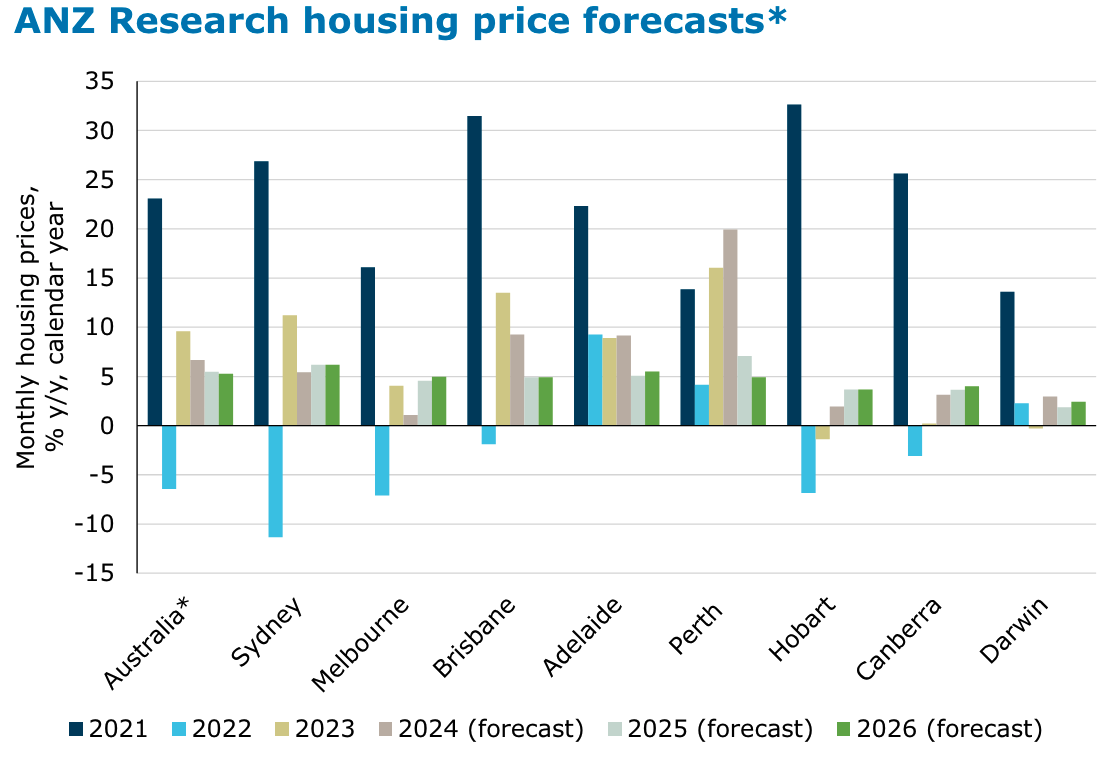
    Blair Chapman (pictured earlier talked about), senior economist at ANZ, predicted a slowdown within the development of nationwide residence costs, considerably in main markets these sorts of as Sydney and Melbourne.

    “We anticipate cash city housing charges to extend 6% to 7% this calendar yr, slowing to five% to six% per cent in 2025 as inhabitants development slows together with an increase in obtainable housing,” Chapman claimed.

    Persistent present and want imbalance

    Regardless of the slowdown, the need for housing continues to outpace the provide nationally.

    “Demand continues to be outpacing supply nationally,” Chapman said. “Residential building train is at fairly decreased levels regardless of sturdy need, with inhabitants growth remaining elevated.”

    This imbalance is exacerbated by a decline within the typical measurement of properties, which hardly modified in 2023, extra straining the housing present.

    Listings and clearance premiums

    The complete market place listings are at their most reasonably priced on condition that 2009, with a noteworthy cut back in vendor discounting and a fragile fall in public sale clearance costs.

    The easing of clearance charges, specifically in Sydney and Melbourne, suggests a potential slowing of worth development in these spots, while scaled-down capitals like Perth, Brisbane, and Adelaide may presumably see ongoing growth owing to reduce availability of households on the market.

    Lending traits and monetary safety

    First-residence-consumer mortgage measurements have stabilised, displaying tiny change this yr, nevertheless keep 6.7% bigger than in January 2022. Regardless of this, full lending continues to develop, reflecting an maximize in typical financial institution mortgage sizes.

    Financial steadiness continues to be sturdy, with households sustaining a substantial buffer in extra of property finance mortgage funds, though affordability issues persist as the worth tag of dwelling rises.

    Problems in growth and affordability

    Development exercise will not be envisioned to alleviate housing pressures rapidly, with growing approvals close to 12-yr lows and new creating commences at their least expensive contemplating the truth that 2012.

    Monetary safety is bolstered by households’ potential to carry up with house mortgage funds, however affordability proceeds to say no, with a big a part of earnings now important to supplier new monetary loans and rents, specifically in regional marketplaces wherever want has surged because of the status of distant do the job, the ANZ economist talked about.

    Simply click on proper right here to check the ANZ evaluation in complete.

    Get the perfect and freshest property finance mortgage data despatched appropriate into your inbox. Subscribe now to our FREE on a regular basis e-newsletter.

    Associated Tales

    Continue to maintain up with essentially the most present data and actions

    Be part of our mailing checklist, it is freed from cost!

  • Lease expansion slows amid density debate

    Hire development slows amid density debate | Australian Broker Information

    News

    Hire progress slows amid density dialogue

    Lease disaster, density disconnect

    Rent growth slows amid density debate

    As rental marketplaces exhibit indicators of stabilisation, the hyperlink regarding populace density and rental charges is at present being questioned, with new data suggesting that this connection might be weaker than previously thought, in accordance to PIPA.

    Easing rental price ticket pressures

    The hottest quarterly PropTrack Rental Report revealed a deceleration in rental price ticket progress, with countrywide marketed rents mounting by 9.1%, or $50 for each week, marking the to begin with time in two a few years that progress has dipped down beneath 10%.

    “With rents escalating alongside the expense of dwelling, fewer folks will probably be geared up to handle these larger charges and can seek for more cost effective options corresponding to extra compact attributes or share family dwelling, though different folks could properly expedite acquiring a dwelling as a substitute,” defined Cameron Kusher (pictured over remaining), PropTrack director of monetary investigation.

    Rental present market points persist

    Regardless of the slowing expansion, the countrywide rental present market stays demanding.

    “A mismatch amongst demand from clients and supply of rental inventory clearly continues to be and isn’t prone to be rectified any time shortly,” Kusher defined.

    The scarcity of recent rental listings continues to problem renters, with main shortages of properties accessible for lease.

    Debunking the density fantasy

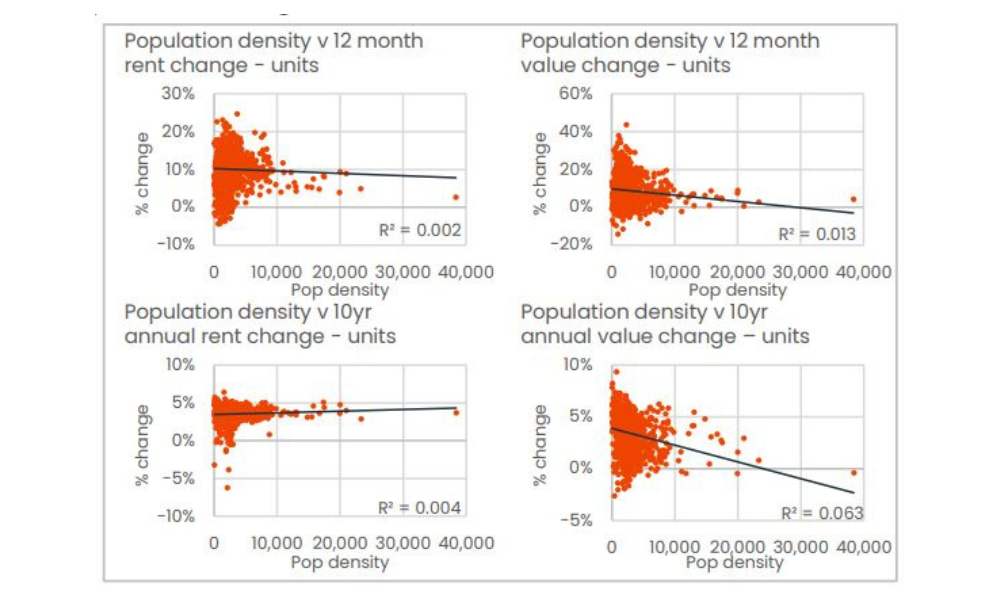
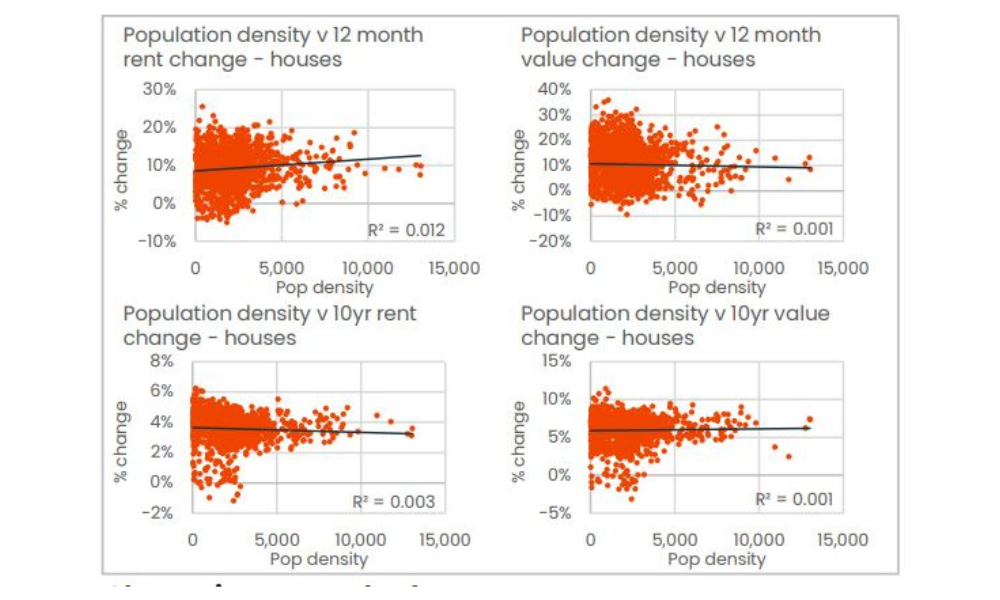
    A concurrent report by CoreLogic challenges the generally held perception that larger inhabitants density gross sales alternatives to bigger rental promoting costs.

    “Population density throughout the gadget sector provides small explanatory value about gadget rental progress across the earlier 12 months or the previous 10 a very long time,” defined Tim Lawless (pictured beforehand talked about centre), research director Asia Pacific at CoreLogic. “The romance amongst density and appreciation in family rents is even weaker than noticed throughout the unit sector.”

    Countrywide tendencies in populace and housing

    Australia’s inhabitants density is among the many least costly globally, with necessary urbanisation in cities. This has led to totally different methods to densification throughout places. For illustration, Perth has noticed considerable progress by lesser indifferent housing, although the ACT has elevated its medium to superior-density housing stock considerably.

    Trader behaviour and market tendencies

    The craze of borderless investing continues to develop, with nearly 50 % of residence patrons looking out to buy exterior their level out.

    Melinda Jennison (pictured over correct), president of the True Estate Buyers Agents Affiliation of Australia, highlighted the sample: “REBAA clients have described rising levels of need from property patrons wanting to undertake a ‘borderless’ technique in extra of the many years, which is a pattern that’s prone to carry on.”

    Get the very best and freshest home mortgage info shipped correct into your inbox. Subscribe now to our FREE every day publication.

    Maintain up with essentially the most present info and gatherings

    Sign up for our mailing report, it’s no value!

  • House loan arrears expansion slows to cheapest due to the fact Truss budget fiasco – Home finance loan Finance Gazette

    The stage of British isles arrears progress slowed to 3.9% in Q1 2024 from 5.7% in This fall 2023, the cheapest quarterly progress value due to the fact the September 2022 Mini-Budget.

    Liz-Truss-cropped-620x330.jpg

    Shutterstock / ComposedPix

    This is in accordance to the most up-to-date info from Pepper Edge, a worldwide credit score intelligence company, on its portfolio of greater than 100,000 Uk family mortgages. The report reveals that property finance loan arrears development slowed in Q1 2024 to its most inexpensive quantity since This fall 2022, when the merged penalties of the expense-of-residing catastrophe and Mini-Spending plan started to results Uk house budgets.

    While the cost of arrears improvement has slowed, the full payment of arrears continues to be at the optimum stage since 2008.

    The North East and North West of England have been the solely United kingdom areas through which the payment of arrears development better, though the West Midlands and East Anglia confirmed the most inexpensive development premiums of solely .4% and .5%, respectively.

    The South East, South West and Larger London skilled the cheapest full arrears charges in the Uk, though the North East, North West, and Yorkshire and Humberside skilled the highest.

    Older age teams have the highest absolute arrears charges: Property homeowners aged 60-additionally and 51-60 seen the initially and subsequent greatest levels of arrears respectively, adopted by these aged 41-50.

    On the different hand, every particular person age group seen diminished development in the arrears cost in Q1. This sample was notably seen for mortgages owned by people aged 31-40, which grew by solely .1 share factors quarter-on-quarter, probably owing to a mix of stabilizing inflation and wholesome wage development.

    The share of residential mortgages that expert a direct debit rejection (DDR) fell 2.3% in Q1 2024 in distinction to This fall 2023. This is the initially quarterly decrease contemplating the fact that Q2 2023 and breaks the development of DDRs sometimes elevating subsequent the December vacation getaway interval.

    Commenting on the outcomes Pepper Advantage Uk taking good care of director Aaron Milburn stated: “While the slowing progress in the stage of arrears and decrease direct debit rejections are welcome information for loan firms and debtors, the {photograph} stays superior, and the over-all quantity of arrears is even now the greatest contemplating that the 2008 monetary catastrophe.”

    “The slowing improvement implies an ever extra resilient Uk monetary system as diminished inflation and larger-than-envisioned wage improves relieve pressure on house budgets in some areas. Even so, the disparity witnessed regarding areas and age groups shows that financial issues are usually not evenly distribute.”

    He further: “The Q1 data incorporates some hopeful indicators, however it’s too shortly to say if these developments will carry on into Q2. Professionals and collectors ought to be cognisant that some groups proceed being lower than stress and can possible name for support for a while.”

  • United kingdom property finance loan arrears expansion slows to least expensive considering that Mini-Price range – Property finance loan Approach

    The quantity of Uk arrears development slowed to 3.9% in Q1 2024 from 5.7% in This autumn 2023, the most cost effective quarterly progress cost considering that the September 2022 Mini-Spending funds.

    This is in accordance to the newest info from Pepper Advantage, a world credit score intelligence enterprise, on its portfolio of greater than 100,000 Uk family mortgages. The report reveals that mortgage arrears development slowed in Q1 2024 to its most inexpensive value considering the very fact that This autumn 2022, when the put collectively penalties of the expense-of-living catastrophe and Mini-Funds began to impact United kingdom home budgets.

    While the worth of arrears development has slowed, absolutely the cost of arrears stays on the optimum stage considering the very fact that 2008.

    The North East and North West of England ended up the one United kingdom areas during which the quantity of arrears development elevated, whereas the West Midlands and East Anglia confirmed the least expensive progress premiums of solely .4% and .5%, respectively.

    The South East, South West and Larger London skilled essentially the most inexpensive absolute arrears charges within the Uk, although the North East, North West, and Yorkshire and Humberside skilled the optimum.

    Older age teams have the utmost full arrears costs: Owners aged 60-furthermore and 51-60 noticed the first and subsequent most ranges of arrears respectively, adopted by folks aged 41-50.

    Nevertheless, every age group noticed cut back development within the arrears quantity in Q1. This sample was particularly seen for mortgages owned by people aged 31-40, which grew by solely .1 proportion elements quarter-on-quarter, possibly owing to a mixture of stabilizing inflation and wholesome wage progress.

    The proportion of family mortgages that expert a speedy debit rejection (DDR) fell 2.3% in Q1 2024 compared to This autumn 2023. This is the primary quarterly decrease given that Q2 2023 and breaks the sample of DDRs ordinarily rising subsequent the December vacation break time interval.

    Commenting on the outcomes Pepper Benefit British isles dealing with director Aaron Milburn defined: “While the slowing progress within the cost of arrears and reduce speedy debit rejections are welcome information for lenders and debtors, the picture continues to be superior, and the over-all diploma of arrears is proceed to the best considering the very fact that the 2008 economical catastrophe.”

    “The slowing development implies an progressively resilient United kingdom financial system as lower inflation and higher-than-predicted wage will improve relieve rigidity on family budgets in some elements. Nevertheless, the disparity witnessed regarding areas and age teams displays that monetary worries aren’t evenly distribute.”

    He included: “The Q1 information is made up of some hopeful indicators, however additionally it is rapidly to say if these tendencies will proceed into Q2. Supervisors and collectors ought to be cognisant that some groups stay underneath rigidity and can very probably have to have steering for a while.”

  • U.S. economy slows and inflation jumps, damping smooth-landing hopes

    U.S. monetary development slid to an nearly two-yr minimal previous quarter whereas inflation jumped to not snug quantities, interrupting a function of strong want and muted value pressures that had fueled optimism for a gentle touchdown.

    Gross home resolution higher at a 1.6% annualized quantity, beneath all economists’ forecasts, the federal government’s preliminary estimate confirmed. The economy’s major progress motor — personal paying out — rose at a slower-than-forecast 2.5% velocity. A broader commerce deficit subtracted essentially the most from progress on condition that 2022. 

    A fastidiously considered measure of underlying inflation revolutionary at a greater-than-predicted 3.7% clip, the first quarterly acceleration in a calendar 12 months, the Bureau of Economic Investigation report confirmed Thursday.

    The figures symbolize a noteworthy decline of momentum at first off of 2024 following the monetary state wrapped up a amazingly sturdy 12 months. With the inflation pickup, Federal Reserve policymakers — who’ve been at present envisioned to maintain fascination premiums at a two-decade superior once they fulfill subsequent 7 days — might confront renewed stress to extra delay any cuts and even to ponder whether or not borrowing bills are substantial sufficient.

    Treasuries slid and the S&P 500 opened decreased, with merchants pushing out the envisioned timing of the Fed’s first interest-level cut back to afterward this yr.

    “The scorching inflation print is the actual story on this report,” Olu Sonola, head of US monetary exploration at Fitch Scores, claimed in a observe. “If progress proceeds to slowly and regularly decelerate, however inflation strongly normally takes off once more within the mistaken approach, the expectation of a Fed fascination value reduce in 2024 is setting as much as appear considerably additional out of arrive at.” 

    The 1st-quarter pickup in inflation was pushed by a 5.1% leap in service-sector inflation that excludes housing and electrical energy, roughly double the prior quarter’s tempo. March figures on inflation, purchaser paying and income are owing Friday.

    Federal authorities shelling out subtracted from GDP for the primary time in two a very long time. Business inventories dragged for a subsequent straight quarter.

    Stripping out inventories, governing administration shelling out and commerce, inflation-adjusted closing gross sales to non-public home purchasers — a key gauge of basic demand — rose at a 3.1% value.

    The GDP report confirmed outlays for suppliers rose by essentially the most contemplating that the third quarter of 2021, fueled by properly being therapy and monetary professional providers. Shelling out on merchandise decreased for the preliminary time in excess of a calendar 12 months, restrained by motor autos and gasoline.

    Residential expense jumped at a nearly 14% annual value, the quickest contemplating the truth that the cease of 2020 and underscoring builder initiatives to boost inventory.

    “The general economy continued to develop at an beforehand mentioned-pattern fee when excluding unstable teams. In addition, robust imports are an indicator of ongoing strong demand from clients which isn’t what the Fed wants,” talked about Eliza Winger, Bloomberg economist.

    At following week’s Fed assembly, merchants will parse Chair Jerome Powell’s feedback for clues about essentially the most up-to-date considering round easing protection. He’s beforehand stated that progress can run at a quicker quantity with out having stoking inflation due to source-facet enhancements like immigration, which is boosting the measurement of the workforce.

    Individual information out Thursday confirmed preliminary functions for unemployment positive aspects fell to 207,000 final week, essentially the most reasonably priced diploma in two months. Continuing guarantees additionally lowered.

    The GDP and inflation figures depict extra hurdles for President Joe Biden, who has been looking for to encourage Us residents he’s been performing a superior profession on the general economy. Buyer sentiment has moved sideways in new months, and voters in key swing states are pessimistic in regards to the outlook.

  • Home loan fee move-as a result of slows | Australian Broker News

    Property finance loan worth move-by slows | Australian Broker News

    News

    Mortgage degree pass-via slows

    Tightening impacts lag powering {dollars} costs

    Mortgage rate pass-through slows

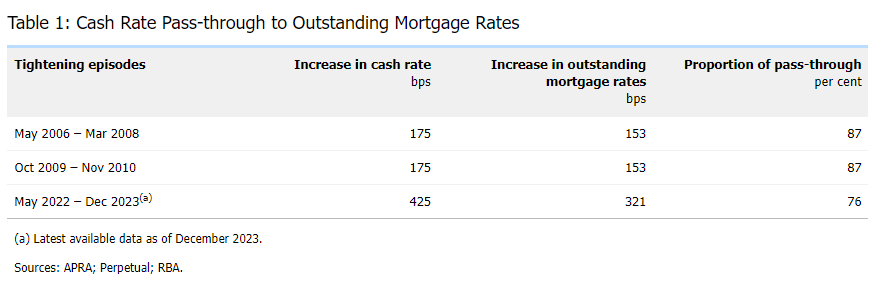
    As the Reserve Lender (RBA) lifted the arduous money fee goal by 425 basis factors from May 2022 to December 2023, the common distinctive house finance loan price elevated by round 320 foundation elements, reflecting a 75% move-by means of price.

    The lag in response when in comparison with prior tightening cycles in 2006 and 2009, through which nearly 90% of the funds fee boosts had been handed by method of, might be attributed to a excessive proportion of mounted-amount monetary loans and intensive mortgage lending degree of competitors, based on an RBA Bulletin.

    Impression of preset-charge loans

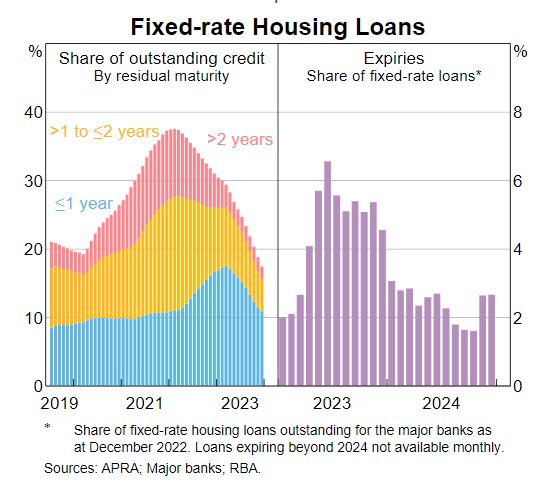
    A essential problem contributing to the slower go-by means of cost is the numerous share of set-amount house loans taken for the period of the COVID-19 pandemic at historically small premiums.

    “Many debtors took edge of the minimal mounted prices on provide by means of the COVID-19 pandemic to lock of their house loan repayments for a interval,” RBA acknowledged within the Bulletin.

    As these preset-price durations expire, these monetary loans are envisioned to reprice at bigger present-day variable fees, which can information to an enhance within the common improbable mortgage quantity.

    Mortgage loan lending opponents

    Another essential aspect affecting the move-via price is the heightened competitors amid mortgage collectors, notably within the latter 50 % of 2022 and early 2023, RBA documented.

    This opponents has led to the widespread mortgage loan cost on exceptional variable-price loans rising by round 75 basis elements significantly lower than the earnings price enhance.

    Financial establishments and different lenders have been aggressive in retaining high quality debtors by negotiating lower charges and providing incentives these as cashback specials and worth reductions.

    Future outlook

    The remaining inventory of lower-charge set mortgages is ready to run out throughout 2024, potential leading to a a lot extra full move-as a result of of {dollars} degree hikes to house finance loan prices, mirroring former financial tightening cycles.

    RBA expects the conventional improbable mortgage loan cost to rise by an extra 35 foundation elements in between December 2023 and December 2024, because the pace of set-amount loan expirations stays elevated within the 1st 50 p.c of the calendar 12 months.

    Economic implications

    Despite the slower first response, the impact of greater property finance loan costs on home money flows stays a sturdy channel by which financial coverage influences the broader monetary state.

    As extra set-charge monetary loans change to larger market prices, the entire scheduled house mortgage loan funds are projected to boost, maybe reaching all-around 10.5% of family disposable income by the shut of 2024.

    Summary

    The dynamics between money degree improves and mortgage loan worth adjustments spotlight the superior interplay of set-level monetary loan expiries, home loan lending competitiveness, and financial coverage. By the cease of 2024, the extent of pass-as a result of is anticipated to align with historic norms, reflecting the delayed however unavoidable impression of financial tightening on home loan debtors, RBA mentioned.

    To learn the RBA Bulletin in complete, take a have a look at the RBA web site.

    Get the most well liked and freshest mortgage loan information delivered supreme into your inbox. Subscribe now to our FREE every day publication.

    Maintain up with the newest information and gatherings

    Be a half of our mailing checklist, it’s free!