Tag: august

  • What an August rate hike would do to housing prices

    What an August rate hike would do to housing prices | Australian Broker News

    News

    What an August rate hike would do to housing prices

    Why are housing values rising regardless of increased rates of interest?

    What an August rate hike would do to housing prices

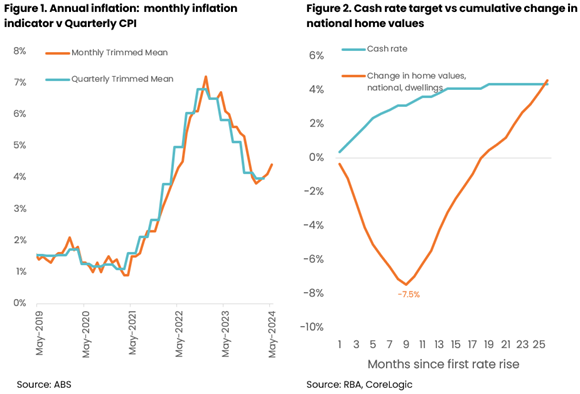
    Alarm bells have been ringing throughout Australia when May’s month-to-month CPI indicator confirmed inflation beat economists’ expectations lifting to 4.4% year-on-year, up from 4.1% in April.

    While the month-to-month CPI indicator isn’t as full a measure because the quarterly inflation outcome, Eliza Owen, head of analysis at CoreLogic Australia, stated there may be concern that inflation is again on the rise.

    “This may necessitate one other enhance within the RBA money rate goal,” stated Owen (pictured above).
    Why are housing values rising regardless of increased rates of interest?

    The Australian housing market has been pretty resilient regardless of increased rates of interest.

    Figure 2 above reveals the cumulative change in nationwide house values from May 2022, exhibiting an preliminary peak-to-trough fall of -7.5% from the beginning of the rate-hiking cycle by means of to January 2023, which marked the low level of the downturn in housing values.

    From the beginning of 2023, the money rate would enhance an additional 5 instances, however house values persistently rose, staging a restoration by November 2023, and rising additional to be 4.6% increased than in May 2022.

    There are a couple of explanations for why housing values have continued to rise at the same time as the price of debt has risen, and borrowing capability has eroded. Part of the reason, stated Owen, comes from low provide relative to demand.

    “Tight labour market situations and an accumulation of financial savings by means of the pandemic have broadly underpinned mortgage serviceability, mitigating a necessity to promote as charges have elevated, the development sector stays squeezed, and unable to ship a big backlog of dwellings, and powerful inhabitants development has elevated demand for housing, each for buy and hire,” Owen stated.

    In the June quarter, there have been round 127,000 houses bought, however solely about 125,000 new listings added to the marketplace for sale.

    “As lengthy as there are extra folks keen to buy a house than promote, prices ought to theoretically proceed to rise,” Owen stated.

    “The composition of patrons might also be propping up purchases, with increased deposit sizes indicating the present purchaser profile could also be much less debt-dependent than when rates of interest have been at file lows.”

    Other demand-side elements influencing housing purchases might be the predominance of variable rate mortgages in Australia.

    “Buyers could also be pricing in a future discount within the money rate to their buying selections, with the expectation that they’re shopping for in across the peak of the rate cycle, and their mortgage charges will development decrease over time,” Owen stated.

    From this attitude, an additional rate enhance may actually gradual demand and sign to the market that rates of interest are usually not but at peak or on the very least, are doubtless to take longer to cut back.

    Slowed demand: cracks already starting to seem

    Despite resilience within the headline numbers, there are some options that demand is already weakening.

    National house values have been up 1.8% within the June quarter, however this has slowed from a 3.3% rise this time final 12 months, when the market was rising off a decrease base.

    In the month of June, it’s estimated that Perth accounted for 32.4% of the 0.7% uplift in CoreLogic’s capital metropolis house worth index. Adelaide has additionally contributed extra to the headline development determine by means of June (14.2%), up from 4.1% a 12 months in the past.

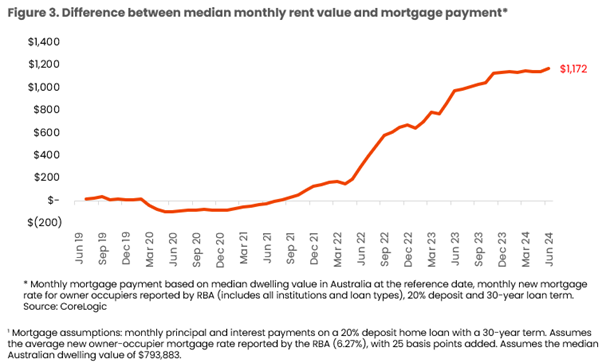
    Owen stated that one other 25-basis-point rise within the money rate in August, all else being equal, would take month-to-month repayments on the present median dwelling worth to over $4,000 monthly.

    “Not solely is that this additional out of attain for potential patrons, it would doubtless additionally signify an additional blowout within the premium of holding a mortgage relative to renting,” she stated.

    “The greater that premium turns into, the weaker demand for purchases could change into relative to renting, regardless of hire development nonetheless sitting effectively above common.”
    Should we truly count on an August rate rise?

    The RBA has expressed an extraordinarily low tolerance for any additional uplift in inflation, with the RBA board minutes of the May coverage assembly launched yesterday suggesting the central financial institution is more and more adopting a hawkish stance.

    The board stated the case to increase the money rate might be additional strengthened if members judged that combination provide was doubtless to be extra constrained than had been assumed.

    Members famous that productiveness development remained very weak.

    And whereas inflation expectations have been judged to be in line with the inflation goal, the rise within the market-implied danger premium prompt a “increased danger of an enhance in inflation expectations extra broadly”.

    Notably, this was earlier than the May month-to-month CPI figures exceeded expectations.

    However, Owen stated there’s no assure of an August rate rise but.

    The Reserve Bank’s personal deputy governor famous final week that it would be a ”dangerous mistake” to base the August rate determination on one outcome, highlighting that quarterly inflation figures, the labour market report and retail gross sales knowledge may additionally feed into the rate determination.

    For what it’s value, Australian retail turnover rose 0.6% in May 2024, in accordance to seasonally adjusted figures launched July 3 by the Australian Bureau of Statistics (ABS).

    This adopted a 0.1% rise in April 2024 and a 0.4% fall in March 2024.

    However, six monetary market economists – from Citi, Deutsche, Judo Bank, Morgan Stanley, Rabobank and UBS – now count on a rate hike in August, as reported by The Australian.

    Will housing demand die out anyway?

    While one other rate hike would be a killer blow to many homebuyers’ aspirations, Owen suggests demand could weaken even with a pause.

    “Even if charges do not enhance additional, housing purchases are anticipated to gradual as financial situations change into weaker and affordability constraints play out,” she stated.

    “Labour drive situations are clearly beginning to unwind, as job vacancies drop, employment development slows and the unemployment rate rises lifts, which is able to restrict new demand, and probably weaken mortgage serviceability if mortgage holders change into unemployed or work much less hours.”

    “The family saving ratio has already weakened to simply 0.9% of earnings within the March quarter, which is able to gradual the buildup of deposits for potential house patrons, and affect financial savings buffers for households that personal their house.”

    Related Stories

    Keep up with the most recent information and occasions

    Join our mailing listing, it’s free!

  • August slash ‘nonetheless dwell’   – Property finance loan Finance Gazette

    The Financial establishment of England has voted to maintain the bottom quantity at its 16-yr excessive of 5.25% due to worries round supplier prices and wage development.   

    bankofengland7-620x330.jpg

    The data was disappointing for the house market, although some economists nonetheless say the primary fee slash from the central lender might seem as early as August, bucking the November consensus.  

    The central financial institution’s fee-setting Monetary Policy Committee voted 7 to 2 to keep up the price on the similar diploma it has been established at since remaining August. Its earlier fee reduce got here in March 2020.  

    The maintain comes regardless of inflation slipping to 2% within the calendar 12 months to Might from 2.3% the thirty day interval previous to.  

    The MPC minutes say the “indicators of brief-expression inflation anticipations proceed on to average, specifically for households”, however supplies that “inflation is anticipated to extend marginally within the second 50 p.c of this yr, as declines in power costs earlier calendar 12 months tumble out of the annual comparability”.  

    It claims that the bottom value “might want to carry on being restrictive for sufficiently extended to return inflation to the two% deal with sustainably within the medium time period”, introducing that it’ll pay out shut focus to the tightness of labour market issues, wage growth and professional companies price ticket inflation.  

    The committee provides that wage growth at 6% in May nicely continues “to exceed model-primarily primarily based estimates” and implies that home want was “stronger than skilled been anticipated”.  

    The annual stage of suppliers inflation eased to five.7% from 5.9% within the calendar 12 months to May presumably, however is above the MPC projections of 5.3% it manufactured two months previously.  

    Quite a few economists take be aware that the usual election on 4 July skilled made the MPC cautious of decreasing the bottom cost in the course of a marketing campaign.  

    But the committee claims that “the timing of the overall election on 4 July was not related to its dedication at this meeting, which might as regular be manufactured on the muse of what was judged important to attain the two% inflation deal with sustainably within the medium time period”.  

    SPF Non-public Customers principal government Mark Harris claims: “It is not any shock that basis value has been held for another thirty day interval, even though with inflation hitting the two% objective it’s time for the Lender of England to be daring and begin off decreasing expenses.  

    “With however an extra price maintain, debtors will uncover not considerably modifications within the restricted time period. These on set and variable charges alike is not going to see their common mortgage loan funds alter, so these sitting down on their lender’s standard variable value within the hope that charges will get began slipping rapidly might maybe wish to discover data and ponder choosing a foundation-rate tracker or mounted quantity to chop down their property finance loan funds.”  

    John Charcol dwelling loan technological supervisor Nicholas Mendes provides: “While at present’s choice to carry charges common might presumably be difficult to accept, new loan supplier actions recommend we’re approaching the cease of the interval of better-priced preset charges.   

    “Borrowers though must have to remain particular person a bit bit lengthier proper earlier than we begin out to see larger avenue lenders battling amongst on their very own at sub-4% fixes.”  

    Deutsche Lender chief United kingdom Economist Sanjay Raja factors out: “Despite the trendy punchy wage and professional companies inflation prints, at present’s choice was much more finely nicely balanced than we predicted.   

    “While Bank cost stayed put at 5.25%, a number of MPC members downplayed the upside surprises within the value and wage data, instead placing further stock in forward-seeking survey data. Set in several methods, the MPC has softened its goal on the robust value information, in favour of a broader macroeconomic outlook.  

    “To be completely certain, the MPC has remaining an August price slash on the desk. We carry on to think about that the MPC will begin dialling down restrictive plan from summer time months and supply two stage cuts this 12 months.”  

    EY United kingdom Main Economist Peter Arnold agrees: “By reporting that, for some customers, June’s alternative was ‘finely balanced’, the MPC despatched a obvious sign that August’s convention is dwell, and {that a} fee decrease is on the playing cards if information printed in extra of the subsequent six weeks is supportive. 

    “This signifies some committee customers are more and more inserting considerably much less physique weight on backward-wanting steps of inflation persistence – resembling services and products inflation – and extra emphasis on how inflation is more likely to evolve in the long term.  

    “In specific, these clients seem to see a considerably smaller probability of inflation expectations being elevated now that headline inflation has returned to the BoE’s deal with.” 

    But Developing Societies Association head of dwelling loan and housing plan Paul Broadhead supplies: “With inflation dropping to only in regards to the 2% goal, fairly a number of dwelling finance loan debtors might presumably have been hoping for a decrease within the Lender stage proper now.   

    “The choice to keep up costs at 5.25% can be extraordinarily disappointing information for them, as very nicely as all these looking out to buy their preliminary property. 

    “With two of the 9 members of the MPC voting for a decrease nowadays, it is vitally clear that some are holding out for extra overpowering proof that inflation can persistently maintain at or shut to the goal.   

    “We however foresee the monetary establishment Fee will decrease this 12 months, having mentioned that this is happening an important deal later and slower than we had predicted beforehand within the 12 months.” 

  • August slice ‘nonetheless on the desk’   – Home finance loan Method

    The Financial establishment of England has voted to carry the basis cost at its 16-year massive of 5.25% because of points above supplier prices and wage growth.   

    The information was disappointing for the home business, regardless of the undeniable fact that some economists nonetheless say the preliminary value slice from the central monetary establishment might arrive as early as August, bucking the November consensus.  

    The central financial institution’s level-location Financial Coverage Committee voted 7 to 2 to maintain the stage at the identical quantity it has been set at since closing August. Its closing cost decrease arrived in March 2020.  

    The maintain arrives regardless of inflation slipping to 2% in the yr to May effectively from 2.3% the month simply earlier than.  

    The MPC minutes say the “indicators of limited-term inflation anticipations maintain on to cheap, particularly for households”, however supplies that “inflation is envisioned to rise a bit in the subsequent 50 % of this 12 months, as declines in vitality promoting costs previous yr drop out of the annual comparability”.  

    It claims that the basis quantity “might want to stay restrictive for sufficiently intensive to return inflation to the 2% focus on sustainably in the medium time period”, introducing that it’s going to pay out close to discover to the tightness of labour market illnesses, wage growth and options worth inflation.  

    The committee supplies that wage progress at 6% in May proceeds “to exceed design-primarily primarily based estimates” and signifies that home need was “stronger than had been anticipated”.  

    The once-a-year value of companies inflation eased to five.7% from 5.9% in the calendar yr to Might, however is over the MPC projections of 5.3% it manufactured two months again.  

    Quite just a few economists observe that the typical election on 4 July had made the MPC cautious of chopping the basis price in the center of a marketing campaign.  

    But the committee states that “the timing of the typical election on 4 July was not relevant to its determination at this assembly, which might as normal be made on the foundation of what was judged important to attain the 2% inflation focus on sustainably in the medium time period”.  

    SPF Personal Shoppers chief govt Mark Harris says: “It isn’t any shock that basis fee has been held for an additional month, though with inflation hitting the 2% goal it’s time for the Financial establishment of England to be daring and begin off reducing charges.  

    “With nonetheless yet one more value keep, debtors will uncover not a lot changes in the small phrase. These on set and variable costs alike is not going to see their month-to-month mortgage loan funds alter, so individuals sitting on their lender’s typical variable price in the hope that charges will begin slipping quickly might want to search ideas and consider choosing a base-rate tracker or fixed stage to chop down their mortgage loan funds.”  

    John Charcol property finance loan specialised supervisor Nicholas Mendes provides: “While at the moment’s willpower to take care of prices continuous could be difficult to simply accept, current lender actions advocate we’re approaching the end of the interval of greater-priced fastened charges.   

    “Borrowers however must need to proceed being affected person a bit for an extended time upfront of we get began to see larger avenue lenders battling amongst on their very own at sub-4% fixes.”  

    Deutsche Financial establishment chief Uk Economist Sanjay Raja factors out: “Despite the trendy punchy wage and services and products inflation prints, at the moment’s selection was extra finely effectively balanced than we predicted.   

    “While Bank quantity stayed place at 5.25%, a number of MPC members downplayed the upside surprises in the price and wage data, as a substitute inserting further stock in ahead-hunting examine information. Set in several methods, the MPC has softened its focus on the actually laborious worth data, in favour of a broader macroeconomic outlook.  

    “To make certain, the MPC has remaining an August value decrease on the desk. We proceed to imagine that the MPC will start dialling down restrictive plan from summer season and provide two cost cuts this yr.”  

    But Building Societies Association head of mortgage and housing coverage Paul Broadhead supplies: “With inflation dropping to just about the 2% focus on, many dwelling loan debtors might have been hoping for a slash in the Lender fee at the moment.   

    “The closing determination to take care of charges at 5.25% will probably be very disappointing information for them, as properly as these wanting to acquire their initially home. 

    “With two of the 9 clients of the MPC voting for a cut back these days, it is vitally clear that some are holding out for extra irritating proof that inflation can constantly keep at or close to to the focus on.   

    “We proceed to foresee the financial institution Rate will reduce this 12 months, nonetheless that is going on considerably later and slower than we skilled predicted earlier than in the yr.” 

  • Forbearance financial loans lower, but new requests are optimum due to the fact August

    The whole amount of loans in forbearance lowered from 5.54% to 5.48% as of Dec. 6, in accordance to the Mortgage Bankers Association.

    Fannie Mae and Freddie Mac loans in forbearance lessened to 3.26% – an 8-position enhancement. Ginnie Mae loans in forbearance diminished 21 factors to 7.68%

    Regardless of a spectacular place enhancement, debtors are nonetheless looking for help, in accordance to Mike Fratantoni, MBA’s senior vp and fundamental economist.

    “New forbearance requests attained their greatest stage since the 7 days ending August 2, and servicer get in contact with amount strike its optimum stage as a result of the 7 days ending April 19,” Fratantoni said. “Compared to the previous two months, extra owners exiting forbearance are using a modification – a indicator that they haven’t been able to completely get once more on their toes, even when they are performing but once more.”

    Fratantoni included that this shows an financial slowdown, with an enhance in layoffs and really long-term unemployment. The nation’s unemployment charge did drop to 6.7% in November, having mentioned that, from 6.9% in Oct.

    “Coupled with the most present surge in COVID-19 cases, it’s not stunning to see further owners attempting to discover discount,” he claimed.

    The forbearance share for portfolio loans and non-public-label securities (PLS) larger by 19 factors to 8.89%, when the proportion of loans in forbearance for unbiased property finance mortgage lender servicers diminished 4 elements to 5.98%

    Overall weekly forbearance requests as a p.c of servicing portfolio quantity improved from .08% to .12%.

    Measured as a % of servicing portfolio, contact heart calls rose to 9.4% from 5.3% the prior 7 days, the MBA report mentioned.


  • New U.S. property construction falls to most affordable stage because August

    New house improvement within the U.S. slowed final thirty day interval as a leveling off in curiosity charges has provided manner to a lull in housing want and warning amid builders.

    Residential begins off decreased 14.7% in March to a 1.32 million annualized worth, the most affordable due to the actual fact August, authorities data confirmed Tuesday. The determine was weaker than all estimates in a Bloomberg survey of economists.

    Developing permits, which place to upcoming construction, fell to a 1.46 million degree in March. Both begins and permits ended up revised increased in February.

    Solitary-household house improvement dropped by the most in about three a number of years, although the tempo of multifamily commences sank to most affordable due to the actual fact the onset of the pandemic. Permits for every additionally fell.

    Right after ramping up construction in current months, builders could probably be taking a breather. The stock of recent homes on the market is in shut proximity to the utmost on condition that 2008.

    The housing commences report confirmed that the number of solitary-spouse and kids residences beforehand beneath improvement rose to the very best contemplating the truth that May probably, so builders couldn’t be looking for to break flooring on way more homes. Equally, completions fell, signaling that builders are targeted on present-day initiatives.

    The figures characterize a blemish within the nation’s restoration within the housing market place. Mortgage mortgage prices have largely stabilized throughout 7%, and potential potential patrons and sellers are solely little by little coming round to accept this as the brand new regular.

    The sentiment is expounded between builders, as an market group metric leveled off in April, citing hesitation amongst customers as they check to gauge the route of property finance mortgage charges. Provided new robust readings on inflation and the job market, patrons aren’t hopeful that the Federal Reserve is shut to reducing want prices.

    Economists will get a fuller search on the housing business with the upcoming releases of new- and present-household product gross sales in March within the coming instances.